

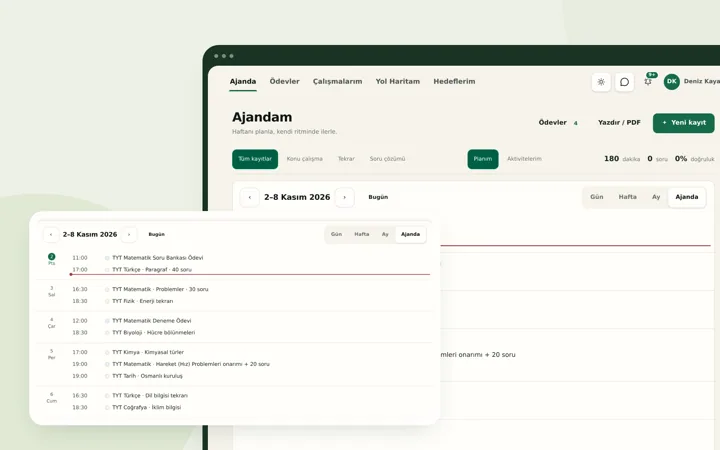
 Planla
Haftanın yolu, önünde.
Çalışma bloklarını ajandana yerleştir, günler arasında sürükle. Planını PDF veya Excel olarak al.
Maarif modeli 10. sınıf İngilizce (9-12) programında 8 ünite ve 192 öğrenme çıktısı (kazanım) var. Çıktılar ve süreç bileşenleri MEB programındaki ifadeyle, kodlarıyla verilmiştir.
Bu liste MEB öğretim programıdır; YKS’de sorulacak konuların resmî listesi değildir. 2027 YKS önceki programla yapılır, 2028 için ÖSYM kılavuzu esas alınmalıdır. Daha önceki programa göre hazırlanmış katalog için TYT / AYT konuları sayfasına, modelin takvimi için Maarif modeli ve YKS yazısına bak.
Bu sınıfın süreç bileşenleri çok sayıda olduğu için burada yalnız ünite ve öğrenme çıktıları verilmiştir. Süreç bileşenlerinin tamamı MEB program PDF’indedir.
Students can prepare and get ready for listening (to)/watching about the current content on ''school life and education with different types of schools in the world; regular and extracurricular activities at different types of schools; school anxiety and stress; national days and celebrations''.
Students can bring together the information in the current content on ''school life and education with different types of schools in the world; regular and extracurricular activities at different types of schools; school anxiety and stress; national days and celebrations''.
Students can make sense of and derive meaning from the current content on ''school life and education with different types of schools in the world; regular and extracurricular activities at different types of schools; school anxiety and stress; national days and celebrations''.
Students can reflect on the information, experiences, thoughts, ideas, and feelings related to the listening (to)/watching process about the current content on ''school life and education with different types of schools in the world; regular and extracurricular activities at different types of schools; school anxiety and stress; national days and celebrations'' in relation to themselves or others, both individually and/or with others.
Students can select and use target phonological aspects such as pronunciation and intonation of target sounds, words, phrases, clauses, and sentences in utterances authentically, naturally, and accurately in the current content about ''school life and education with different types of schools in the world; regular and extracurricular activities at different types of schools; school anxiety and stress; national days and celebrations'' to develop holistic and conscious pronunciation skills after recognising them in context.
Students can prepare for reading the content on ''school life and education with different types of schools in the world; regular and extracurricular activities at different types of schools; school anxiety and stress; national days and celebrations'' efficiently and effectively.
Students can bring information together about the current content on ''school life and education with different types of schools in the world; regular and extracurricular activities at different types of schools; school anxiety and stress; national days and celebrations'' through skimming, scanning and detailed reading.
Students can make sense of and derive meaning from the current content on ''school life and education with different types of schools in the world; regular and extracurricular activities at different types of schools; school anxiety and stress; national days and celebrations''.
Students can reflect on the information, experiences, thoughts, ideas, and feelings related to the reading process about the current content on ''school life and education with different types of schools in the world; regular and extracurricular activities at different types of schools; school anxiety and stress; national days and celebrations'' in relation to themselves or others, both individually and/ or with others.
Students can select and use target vocabulary efficiently, effectively, and accurately, based on the current content about ''school life and education with different types of schools in the world; regular and extracurricular activities at different types of schools; school anxiety and stress; national days and celebrations'' after recognising them in context and developing their conscious and inductive vocabulary learning skills.
Students can select and use target grammatical language items efficiently, effectively, and accurately, based on the current content about ''school life and education with different types of schools in the world; regular and extracurricular activities at different types of schools; school anxiety and stress; national days and celebrations'', after recognising them in context and developing their conscious and inductive grammaring skills through consciousness-raising and discovery.
Students can prepare for writing efficiently and accurately based on the current content about ''school life and education with different types of schools in the world; regular and extracurricular activities at different types of schools; school anxiety and stress; national days and celebrations''.
Students can analyse and understand a provided model to guide them in producing similar writing tasks related to the content on ''school life and education with different types of schools in the world; regular and extracurricular activities at different types of schools; school anxiety and stress; national days and celebrations''.
Students can construct new written content on ''school life and education with different types of schools in the world; regular and extracurricular activities at different types of schools; school anxiety and stress; national days and celebrations'' based on their understanding of the model(s) provided.
Students can practise producing written content based on the current theme ''school life and education with different types of schools in the world; regular and extracurricular activities at different types of schools; school anxiety and stress; national days and celebrations''.
Students can engage in the process of writing related to the content on ''school life and education with different types of schools in the world; regular and extracurricular activities at different types of schools; school anxiety and stress; national days and celebrations''.
Students can reconstruct their writing about the current theme on ''school life and education with different types of schools in the world; regular and extracurricular activities at different types of schools; school anxiety and stress; national days and celebrations'' to communicate effectively about it.
Students can reflect on their experiences, thoughts, ideas, and feelings related to the writing process about the current content on ''school life and education with different types of schools in the world; regular and extracurricular activities at different types of schools; school anxiety and stress; national days and celebrations'' in relation to themselves or others, both individually and/or with others.
Students can prepare themselves to speak meaningfully, fluently, and efficiently about the current content on ''school life and education with different types of schools in the world; regular and extracurricular activities at different types of schools; school anxiety and stress; national days and celebrations''.
Students can analyse and understand the model content related to ''school life and education with different types of schools in the world; regular and extracurricular activities at different types of schools; school anxiety and stress; national days and celebrations'' to support the production of spoken language.
Students can produce meaningful and accurate spoken content related to the current theme on ''school life and education with different types of schools in the world; regular and extracurricular activities at different types of schools; school anxiety and stress; national days and celebrations''.
Students can construct meaningful spoken content about ''school life and education with different types of schools in the world; regular and extracurricular activities at different types of schools; school anxiety and stress; national days and celebrations'' through efficient and meaningful practice.
Students can reconstruct the information about ''school life and education with different types of schools in the world; regular and extracurricular activities at different types of schools; school anxiety and stress; national days and celebrations'' when communicating with others.
Students can reflect on their experiences, thoughts, ideas, and feelings related to the speaking process about the current content on ''school life and education with different types of schools in the world; regular and extracurricular activities at different types of schools; school anxiety and stress; national days and celebrations'' in relation to themselves or others, both individually and/or with others.
Students can prepare and get ready for listening (to)/watching about the current content on ''classroom life and learning with learning activities in the classroom; personal learning styles; learning with technology in the classroom''.
Students can bring together the information in the current content on ''classroom life and learning with learning activities in the classroom; personal learning styles; learning with technology in the classroom''.
Students can make sense of and derive meaning from the current content on ''classroom life and learning with learning activities in the classroom; personal learning styles; learning with technology in the classroom''.
Students can reflect on the information, experiences, thoughts, ideas, and feelings related to the listening (to)/watching process about the current content on ''classroom life and learning with learning activities in the classroom; personal learning styles; learning with technology in the classroom'' in relation to themselves or others, both individually and/or with others.
Students can select and use target phonological aspects such as pronunciation and intonation of target sounds, words, phrases, clauses, and sentences in utterances authentically, naturally, and accurately in the current content about ''classroom life and learning with learning activities in the classroom; personal learning styles; learning with technology in the classroom'' to develop holistic and conscious pronunciation skills after recognising them in context.
Students can prepare for reading the content on ''classroom life and learning with learning activities in the classroom; personal learning styles; learning with technology in the classroom'' efficiently and effectively.
Students can bring information together about the current content on ''classroom life and learning with learning activities in the classroom; personal learning styles; learning with technology in the classroom'' through skimming, scanning and detailed reading.
Students can make sense of and derive meaning from the current content on ''classroom life and learning with learning activities in the classroom; personal learning styles; learning with technology in the classroom''.
Students can reflect on the information, experiences, thoughts, ideas, and feelings related to the reading process about the current content on ''classroom life and learning with learning activities in the classroom; personal learning styles; learning with technology in the classroom'' in relation to themselves or others, both individually and/or with others.
Students can select and use target vocabulary efficiently, effectively, and accurately, based on the current content about ''classroom life and learning with learning activities in the classroom; personal learning styles; learning with technology in the classroom'' after recognising them in context and developing their conscious and inductive vocabulary learning skills.
Students can select and use target grammatical language items efficiently, effectively, and accurately, based on the current content about ''classroom life and learning with learning activities in the classroom; personal learning styles; learning with technology in the classroom'', after recognising them in context and developing their conscious and inductive grammaring skills through consciousness-raising and discovery.
Students can prepare for writing efficiently and accurately based on the current content about ''classroom life and learning with learning activities in the classroom; personal learning styles; learning with technology in the classroom''.
Students can analyse and understand a provided model to guide them in producing similar writing tasks related to the content on ''classroom life and learning with learning activities in the classroom; personal learning styles; learning with technology in the classroom''.
Students can construct new written content on ''classroom life and learning with learning activities in the classroom; personal learning styles; learning with technology in the classroom'' based on their understanding of the model(s) provided.
Students can practise producing written content based on the current theme ''classroom life and learning with learning activities in the classroom; personal learning styles; learning with technology in the classroom''.
Students can engage in the process of writing related to the content on ''classroom life and learning with learning activities in the classroom; personal learning styles; learning with technology in the classroom''.
Students can reconstruct their writing about the current theme on ''classroom life and learning with learning activities in the classroom; personal learning styles; learning with technology in the classroom'' to communicate effectively about it.
Students can reflect on their experiences, thoughts, ideas, and feelings related to the writing process about the current content on ''classroom life and learning with learning activities in the classroom; personal learning styles; learning with technology in the classroom'' in relation to themselves or others, both individually and/or with others.
Students can prepare themselves to speak meaningfully, fluently, and efficiently about the current content on ''classroom life and learning with learning activities in the classroom; personal learning styles; learning with technology in the classroom''.
Students can analyse and understand the model content related to ''classroom life and learning with learning activities in the classroom; personal learning styles; learning with technology in the classroom'' to support the production of spoken language.
Students can produce meaningful and accurate spoken content related to the current theme on ''classroom life and learning with learning activities in the classroom; personal learning styles; learning with technology in the classroom''.
Students can construct meaningful spoken content about ''classroom life and learning with learning activities in the classroom; personal learning styles; learning with technology in the classroom'' through efficient and meaningful practice.
Students can reconstruct the information about ''classroom life and learning with learning activities in the classroom; personal learning styles; learning with technology in the classroom'' when communicating with others.
Students can reflect on their experiences, thoughts, ideas, and feelings related to the speaking process about the current content on ''classroom life and learning with learning activities in the classroom; personal learning styles; learning with technology in the classroom'' in relation to themselves or others, both individually and/or with others.
Students can prepare and get ready for listening (to)/watching about the current content on ''personal life and well-being with body parts, human illnesses and diseases; human nature and human well-being today and in the future; fashion and personal fashion preferences''.
Students can bring together the information in the current content on ''personal life and well-being with body parts, human illnesses and diseases; human nature and human well-being today and in the future; fashion and personal fashion preferences''.
Students can make sense of and derive meaning from the current content on ''personal life and well-being with body parts, human illnesses and diseases; human nature and human well-being today and in the future; fashion and personal fashion preferences''.
Students can reflect on the information, experiences, thoughts, ideas, and feelings related to the listening (to)/watching process about the current content on ''personal life and well-being with body parts, human illnesses and diseases; human nature and human well-being today and in the future; fashion and personal fashion preferences'' in relation to themselves or others, both individually and/or with others.
Students can select and use target phonological aspects such as pronunciation and intonation of target sounds, words, phrases, clauses, and sentences in utterances authentically, naturally, and accurately in the current content about ''personal life and well-being with body parts, human illnesses and diseases; human nature and human well-being today and in the future; fashion and personal fashion preferences'' to develop holistic and conscious pronunciation skills after recognising them in context.
Students can prepare for reading the content on ''personal life and well-being with body parts, human illnesses and diseases; human nature and human well-being today and in the future; fashion and personal fashion preferences'' efficiently and effectively.
Students can bring information together about the current content on ''personal life and well-being with body parts, human illnesses and diseases; human nature and human well-being today and in the future; fashion and personal fashion preferences'' through skimming, scanning and detailed reading.
Students can make sense of and derive meaning from the current content on ''personal life and well-being with body parts, human illnesses and diseases; human nature and human well-being today and in the future; fashion and personal fashion preferences''.
Students can reflect on the information, experiences, thoughts, ideas, and feelings related to the reading process about the current content on ''personal life and well-being with body parts, human illnesses and diseases; human nature and human well-being today and in the future; fashion and personal fashion preferences'' in relation to themselves or others, both individually and/or with others.
Students can select and use target vocabulary efficiently, effectively, and accurately, based on the current content about ''personal life and well-being with body parts, human illnesses and diseases; human nature and human well-being today and in the future; fashion and personal fashion preferences'' after recognising them in context and developing their conscious and inductive vocabulary learning skills.
Students can select and use target grammatical language items efficiently, effectively, and accurately, based on the current content about ''personal life and well-being with body parts, human illnesses and diseases; human nature and human well-being today and in the future; fashion and personal fashion preferences'', after recognising them in context and developing their conscious and inductive grammaring skills through consciousness-raising and discovery.
Students can prepare for writing efficiently and accurately based on the current content about ''personal life and well-being with body parts, human illnesses and diseases; human nature and human well-being today and in the future; fashion and personal fashion preferences''.
Students can analyse and understand a provided model to guide them in producing similar writing tasks related to the content on ''personal life and well-being with body parts, human illnesses and diseases; human nature and human well-being today and in the future; fashion and personal fashion preferences''.
Students can construct new written content on ''personal life and well-being with body parts, human illnesses and diseases; human nature and human well-being today and in the future; fashion and personal fashion preferences'' based on their understanding of the model(s) provided.
Students can practise producing written content based on the current theme ''personal life and well-being with body parts, human illnesses and diseases; human nature and human well-being today and in the future; fashion and personal fashion preferences''.
Students can engage in the process of writing related to the content on ''personal life and well-being with body parts, human illnesses and diseases; human nature and human well-being today and in the future; fashion and personal fashion preferences''.
Students can reconstruct their writing about the current theme on ''personal life and well-being with body parts, human illnesses and diseases; human nature and human well-being today and in the future; fashion and personal fashion preferences'' to communicate effectively about it.
Students can reflect on their experiences, thoughts, ideas, and feelings related to the writing process about the current content on ''personal life and well-being with body parts, human illnesses and diseases; human nature and human well-being today and in the future; fashion and personal fashion preferences'' in relation to themselves or others, both individually and/or with others.
Students can prepare themselves to speak meaningfully, fluently, and efficiently about the current content on ''personal life and well-being with body parts, human illnesses and diseases; human nature and human well-being today and in the future; fashion and personal fashion preferences''.
Students can analyse and understand the model content related to ''personal life and well-being with body parts, human illnesses and diseases; human nature and human well-being today and in the future; fashion and personal fashion preferences'' to support the production of spoken language.
Students can produce meaningful and accurate spoken content related to the current theme on ''personal life and well-being with body parts, human illnesses and diseases; human nature and human well-being today and in the future; fashion and personal fashion preferences''.
Students can construct meaningful spoken content about ''personal life and well-being with body parts, human illnesses and diseases; human nature and human well-being today and in the future; fashion and personal fashion preferences'' through efficient and meaningful practice.
Students can reconstruct the information about ''personal life and well-being with body parts, human illnesses and diseases; human nature and human well-being today and in the future; fashion and personal fashion preferences'' when communicating with others.
Students can reflect on their experiences, thoughts, ideas, and feelings related to the speaking process about the current content on ''personal life and well-being with body parts, human illnesses and diseases; human nature and human well-being today and in the future; fashion and personal fashion preferences'' in relation to themselves or others, both individually and/or with others.
Students can prepare and get ready for listening (to)/watching about the current content on ''family life and home with family members and their daily routines today and in the past; hobbies and interests of family members (sports & films); different types of houses and families from the world''.
Students can bring together the information in the current content on ''family life and home with family members and their daily routines today and in the past; hobbies and interests of family members (sports & films); different types of houses and families from the world''.
Students can make sense of and derive meaning from the current content on ''family life and home with family members and their daily routines today and in the past; hobbies and interests of family members (sports & films); different types of houses and families from the world''.
Students can reflect on the information, experiences, thoughts, ideas, and feelings related to the listening (to)/watching process about the current content on ''family life and home with family members and their daily routines today and in the past; hobbies and interests of family members (sports & films); different types of houses and families from the world'' in relation to themselves or others, both individually and/or with others.
Students can select and use target phonological aspects such as pronunciation and intonation of target sounds, words, phrases, clauses, and sentences in utterances authentically, naturally, and accurately in the current content about ''family life and home with family members and their daily routines today and in the past; hobbies and interests of family members (sports & films); different types of houses and families from the world'' to develop holistic and conscious pronunciation skills after recognising them in context.
Students can prepare for reading the content on ''family life and home with family members and their daily routines today and in the past; hobbies and interests of family members (sports & films); different types of houses and families from the world'' efficiently and effectively.
Students can bring information together about the current content on ''family life and home with family members and their daily routines today and in the past; hobbies and interests of family members (sports & films); different types of houses and families from the world'' through skimming, scanning and detailed reading.
Students can make sense of and derive meaning from the current content on ''family life and home with family members and their daily routines today and in the past; hobbies and interests of family members (sports & films); different types of houses and families from the world''.
Students can reflect on the information, experiences, thoughts, ideas, and feelings related to the reading process about the current content on ''family life and home with family members and their daily routines today and in the past; hobbies and interests of family members (sports & films); different types of houses and families from the world'' in relation to themselves or others, both individually and/ or with others.
Students can select and use target vocabulary efficiently, effectively, and accurately, based on the current content about ''family life and home with family members and their daily routines today and in the past; hobbies and interests of family members (sports & films); different types of houses and families from the world'' after recognising them in context and developing their conscious and inductive vocabulary learning skills.
Students can select and use target grammatical language items efficiently, effectively, and accurately, based on the current content about ''family life and home with family members and their daily routines today and in the past; hobbies and interests of family members (sports & films); different types of houses and families from the world'', after recognising them in context and developing their conscious and inductive grammaring skills through consciousness-raising and discovery.
Students can prepare for writing efficiently and accurately based on the current content about ''family life and home with family members and their daily routines today and in the past; hobbies and interests of family members (sports & films); different types of houses and families from the world''.
Students can analyse and understand a provided model to guide them in producing similar writing tasks related to the content on ''family life and home with family members and their daily routines today and in the past; hobbies and interests of family members (sports & films); different types of houses and families from the world''.
Students can construct new written content on ''family life and home with family members and their daily routines today and in the past; hobbies and interests of family members (sports & films); different types of houses and families from the world'' based on their understanding of the model(s) provided.
Students can practise producing written content based on the current theme ''family life and home with family members and their daily routines today and in the past; hobbies and interests of family members (sports & films); different types of houses and families from the world''.
Students can engage in the process of writing related to the content on ''family life and home with family members and their daily routines today and in the past; hobbies and interests of family members (sports & films); different types of houses and families from the world''.
Students can reconstruct their writing about the current theme on ''family life and home with family members and their daily routines today and in the past; hobbies and interests of family members (sports & films); different types of houses and families from the world'' to communicate effectively about it.
Students can reflect on their experiences, thoughts, ideas, and feelings related to the writing process about the current content on ''family life and home with family members and their daily routines today and in the past; hobbies and interests of family members (sports & films); different types of houses and families from the world'' in relation to themselves or others, both individually and/or with others.
Students can prepare themselves to speak meaningfully, fluently, and efficiently about the current content on ''family life and home with family members and their daily routines today and in the past; hobbies and interests of family members (sports & films); different types of houses and families from the world''.
Students can analyse and understand the model content related to ''family life and home with family members and their daily routines today and in the past; hobbies and interests of family members (sports & films); different types of houses and families from the world'' to support the production of spoken language.
Students can produce meaningful and accurate spoken content related to the current theme on ''family life and home with family members and their daily routines today and in the past; hobbies and interests of family members (sports & films); different types of houses and families from the world''.
Students can construct meaningful spoken content about ''family life and home with family members and their daily routines today and in the past; hobbies and interests of family members (sports & films); different types of houses and families from the world'' through efficient and meaningful practice.
Students can reconstruct the information about ''family life and home with family members and their daily routines today and in the past; hobbies and interests of family members (sports & films); different types of houses and families from the world'' when communicating with others.
Students can reflect on their experiences, thoughts, ideas, and feelings related to the speaking process about the current content on ''family life and home with family members and their daily routines today and in the past; hobbies and interests of family members (sports & films); different types of houses and families from the world'' in relation to themselves or others, both individually and/ or with others.
Students can prepare and get ready for listening (to)/watching about the current content on ''life in the neighbourhood, city and social life with activities to do in attractions (cafes, cinemas; gyms, sports clubs); getting help from services (pharmacies, hospitals, etc.); pros and cons of different types of transportation in the neighbourhood and city''.
Students can bring together the information in the current content on ''life in the neighbourhood, city and social life with activities to do in attractions (cafes, cinemas; gyms, sports clubs); getting help from services (pharmacies, hospitals, etc.); pros and cons of different types of transportation in the neighbourhood and city''.
Students can make sense of and derive meaning from the current content on ''life in the neighbourhood, city and social life with activities to do in attractions (cafes, cinemas; gyms, sports clubs); getting help from services (pharmacies, hospitals, etc.); pros and cons of different types of transportation in the neighbourhood and city''.
Students can reflect on the information, experiences, thoughts, ideas, and feelings related to the listening (to)/watching process about the current content on ''life in the neighbourhood, city and social life with activities to do in attractions (cafes, cinemas; gyms, sports clubs); getting help from services (pharmacies, hospitals, etc.); pros and cons of different types of transportation in the neighbourhood and city'' in relation to themselves or others, both individually and/or with others.
Students can select and use target phonological aspects such as pronunciation and intonation of target sounds, words, phrases, clauses, and sentences in utterances authentically, naturally, and accurately in the current content about ''life in the neighbourhood, city and social life with activities to do in attractions (cafes, cinemas; gyms, sports clubs); getting help from services (pharmacies, hospitals, etc.); pros and cons of different types of transportation in the neighbourhood and city'' to develop holistic and conscious pronunciation skills after recognising them in context.
Students can prepare for reading the content on ''life in the neighbourhood, city and social life with activities to do in attractions (cafes, cinemas; gyms, sports clubs); getting help from services (pharmacies, hospitals, etc.); pros and cons of different types of transportation in the neighbourhood and city'' efficiently and effectively.
Students can bring information together about the current content on ''life in the neighbourhood, city and social life with activities to do in attractions (cafes, cinemas; gyms, sports clubs); getting help from services (pharmacies, hospitals, etc.); pros and cons of different types of transportation in the neighbourhood and city'' through skimming, scanning and detailed reading.
Students can make sense of and derive meaning from the current content on ''life in the neighbourhood, city and social life with activities to do in attractions (cafes, cinemas; gyms, sports clubs); getting help from services (pharmacies, hospitals, etc.); pros and cons of different types of transportation in the neighbourhood and city''.
Students can reflect on the information, experiences, thoughts, ideas, and feelings related to the reading process about the current content on ''life in the neighbourhood, city and social life with activities to do in attractions (cafes, cinemas; gyms, sports clubs); getting help from services (pharmacies, hospitals, etc.); pros and cons of different types of transportation in the neighbourhood and city'' in relation to themselves or others, both individually and/or with others.
Students can select and use target vocabulary efficiently, effectively, and accurately, based on the current content about ''life in the neighbourhood, city and social life with activities to do in attractions (cafes, cinemas; gyms, sports clubs); getting help from services (pharmacies, hospitals, etc.); pros and cons of different types of transportation in the neighbourhood and city'' after recognising them in context and developing their conscious and inductive vocabulary learning skills.
Students can select and use target grammatical language items efficiently, effectively, and accurately, based on the current content about ''life in the neighbourhood, city and social life with activities to do in attractions (cafes, cinemas; gyms, sports clubs); getting help from services (pharmacies, hospitals, etc.); pros and cons of different types of transportation in the neighbourhood and city'', after recognising them in context and developing their conscious and inductive grammaring skills through consciousness-raising and discovery.
Students can prepare for writing efficiently and accurately based on the current content about ''life in the neighbourhood, city and social life with activities to do in attractions (cafes, cinemas; gyms, sports clubs); getting help from services (pharmacies, hospitals, etc.); pros and cons of different types of transportation in the neighbourhood and city''.
Students can analyse and understand a provided model to guide them in producing similar writing tasks related to the content on ''life in the neighbourhood, city and social life with activities to do in attractions (cafes, cinemas; gyms, sports clubs); getting help from services (pharmacies, hospitals, etc.); pros and cons of different types of transportation in the neighbourhood and city''.
Students can construct new written content on ''life in the neighbourhood, city and social life with activities to do in attractions (cafes, cinemas; gyms, sports clubs); getting help from services (pharmacies, hospitals, etc.); pros and cons of different types of transportation in the neighbourhood and city'' based on their understanding of the model(s) provided.
Students can practise producing written content based on the current theme ''life in the neighbourhood, city and social life with activities to do in attractions (cafes, cinemas; gyms, sports clubs); getting help from services (pharmacies, hospitals, etc.); pros and cons of different types of transportation in the neighbourhood and city''.
Students can engage in the process of writing related to the content on ''life in the neighbourhood, city and social life with activities to do in attractions (cafes, cinemas; gyms, sports clubs); getting help from services (pharmacies, hospitals, etc.); pros and cons of different types of transportation in the neighbourhood and city''.
Students can reconstruct their writing about the current theme on ''life in the neighbourhood, city and social life with activities to do in attractions (cafes, cinemas; gyms, sports clubs); getting help from services (pharmacies, hospitals, etc.); pros and cons of different types of transportation in the neighbourhood and city'' to communicate effectively about it.
Students can reflect on their experiences, thoughts, ideas, and feelings related to the writing process about the current content on ''life in the neighbourhood, city and social life with activities to do in attractions (cafes, cinemas; gyms, sports clubs); getting help from services (pharmacies, hospitals, etc.); pros and cons of different types of transportation in the neighbourhood and city'' in relation to themselves or others, both individually and/or with others.
Students can prepare themselves to speak meaningfully, fluently, and efficiently about the current content on ''life in the neighbourhood, city and social life with activities to do in attractions (cafes, cinemas; gyms, sports clubs); getting help from services (pharmacies, hospitals, etc.); pros and cons of different types of transportation in the neighbourhood and city''.
Students can analyse and understand the model content related to ''life in the neighbourhood, city and social life with activities to do in attractions (cafes, cinemas; gyms, sports clubs); getting help from services (pharmacies, hospitals, etc.); pros and cons of different types of transportation in the neighbourhood and city'' to support the production of spoken language.
Students can produce meaningful and accurate spoken content related to the current theme on ''life in the neighbourhood, city and social life with activities to do in attractions (cafes, cinemas; gyms, sports clubs); getting help from services (pharmacies, hospitals, etc.); pros and cons of different types of transportation in the neighbourhood and city''.
Students can construct meaningful spoken content about ''life in the neighbourhood, city and social life with activities to do in attractions (cafes, cinemas; gyms, sports clubs); getting help from services (pharmacies, hospitals, etc.); pros and cons of different types of transportation in the neighbourhood and city'' through efficient and meaningful practice.
Students can reconstruct the information about ''life in the neighbourhood, city and social life with activities to do in attractions (cafes, cinemas; gyms, sports clubs); getting help from services (pharmacies, hospitals, etc.); pros and cons of different types of transportation in the neighbourhood and city'' when communicating with others.
Students can reflect on their experiences, thoughts, ideas, and feelings related to the speaking process about the current content on ''life in the neighbourhood, city and social life with activities to do in attractions (cafes, cinemas; gyms, sports clubs); getting help from services (pharmacies, hospitals, etc.); pros and cons of different types of transportation in the neighbourhood and city'' in relation to themselves or others, both individually and/or with others.
Students can prepare and get ready for listening (to)/watching about the current content on ''life in the world and culture with continents, countries, and nationalities; shopping for food and personal food preferences; food and food culture from different parts of the world''.
Students can bring together the information in the current content on ''life in the world and culture with continents, countries, and nationalities; shopping for food and personal food preferences; food and food culture from different parts of the world''.
Students can make sense of and derive meaning from the current content on ''life in the world and culture with continents, countries, and nationalities; shopping for food and personal food preferences; food and food culture from different parts of the world''.
Students can reflect on the information, experiences, thoughts, ideas, and feelings related to the listening (to)/watching process about the current content on ''life in the world and culture with continents, countries, and nationalities; shopping for food and personal food preferences; food and food culture from different parts of the world'' in relation to themselves or others, both individually and/ or with others.
Students can select and use target phonological aspects such as pronunciation and intonation of target sounds, words, phrases, clauses, and sentences in utterances authentically, naturally, and accurately in the current content about ''life in the world and culture with continents, countries, and nationalities; shopping for food and personal food preferences; food and food culture from different parts of the world'' to develop holistic and conscious pronunciation skills after recognising them in context.
Students can prepare for reading the content on ''life in the world and culture with continents, countries, and nationalities; shopping for food and personal food preferences; food and food culture from different parts of the world'' efficiently and effectively.
Students can bring information together about the current content on ''life in the world and culture with continents, countries, and nationalities; shopping for food and personal food preferences; food and food culture from different parts of the world'' through skimming, scanning and detailed reading.
Students can make sense of and derive meaning from the current content on ''life in the world and culture with continents, countries, and nationalities; shopping for food and personal food preferences; food and food culture from different parts of the world''.
Students can reflect on the information, experiences, thoughts, ideas, and feelings related to the reading process about the current content on ''life in the world and culture with continents, countries, and nationalities; shopping for food and personal food preferences; food and food culture from different parts of the world'' in relation to themselves or others, both individually and/or with others.
Students can select and use target vocabulary efficiently, effectively, and accurately, based on the current content about ''life in the world and culture with continents, countries, and nationalities; shopping for food and personal food preferences; food and food culture from different parts of the world'' after recognising them in context and developing their conscious and inductive vocabulary learning skills.
Students can select and use target grammatical language items efficiently, effectively, and accurately, based on the current content about ''life in the world and culture with continents, countries, and nationalities; shopping for food and personal food preferences; food and food culture from different parts of the world'', after recognising them in context and developing their conscious and inductive grammaring skills through consciousness-raising and discovery.
Students can prepare for writing efficiently and accurately based on the current content about ''life in the world and culture with continents, countries, and nationalities; shopping for food and personal food preferences; food and food culture from different parts of the world''.
Students can analyse and understand a provided model to guide them in producing similar writing tasks related to the content on ''life in the world and culture with continents, countries, and nationalities; shopping for food and personal food preferences; food and food culture from different parts of the world''.
Students can construct new written content on ''life in the world and culture with continents, countries, and nationalities; shopping for food and personal food preferences; food and food culture from different parts of the world'' based on their understanding of the model(s) provided.
Students can practise producing written content based on the current theme ''life in the world and culture with continents, countries, and nationalities; shopping for food and personal food preferences; food and food culture from different parts of the world''.
Students can engage in the process of writing related to the content on ''life in the world and culture with continents, countries, and nationalities; shopping for food and personal food preferences; food and food culture from different parts of the world''.
Students can reconstruct their writing about the current theme on ''life in the world and culture with continents, countries, and nationalities; shopping for food and personal food preferences; food and food culture from different parts of the world'' to communicate effectively about it.
Students can reflect on their experiences, thoughts, ideas, and feelings related to the writing process about the current content on ''life in the world and culture with continents, countries, and nationalities; shopping for food and personal food preferences; food and food culture from different parts of the world'' in relation to themselves or others, both individually and/or with others.
Students can prepare themselves to speak meaningfully, fluently, and efficiently about the current content on ''life in the world and culture with continents, countries, and nationalities; shopping for food and personal food preferences; food and food culture from different parts of the world''.
Students can analyse and understand the model content related to ''life in the world and culture with continents, countries, and nationalities; shopping for food and personal food preferences; food and food culture from different parts of the world'' to support the production of spoken language.
Students can produce meaningful and accurate spoken content related to the current theme on ''life in the world and culture with continents, countries, and nationalities; shopping for food and personal food preferences; food and food culture from different parts of the world''.
Students can construct meaningful spoken content about ''life in the world and culture with continents, countries, and nationalities; shopping for food and personal food preferences; food and food culture from different parts of the world'' through efficient and meaningful practice.
Students can reconstruct the information about ''life in the world and culture with continents, countries, and nationalities; shopping for food and personal food preferences; food and food culture from different parts of the world'' when communicating with others.
Students can reflect on their experiences, thoughts, ideas, and feelings related to the speaking process about the current content on ''life in the world and culture with continents, countries, and nationalities; shopping for food and personal food preferences; food and food culture from different parts of the world'' in relation to themselves or others, both individually and/or with others.
Students can prepare and get ready for listening (to)/watching about the current content on ''life in nature and global problems with natural resources; global problems related to natural resources; protecting natural resources''.
Students can bring together the information in the current content on ''life in nature and global problems with natural resources; global problems related to natural resources; protecting natural resources''.
Students can make sense of and derive meaning from the current content on ''life in nature and global problems with natural resources; global problems related to natural resources; protecting natural resources''.
Students can reflect on the information, experiences, thoughts, ideas, and feelings related to the listening (to)/watching process about the current content on ''life in nature and global problems with natural resources; global problems related to natural resources; protecting natural resources'' in relation to themselves or others, both individually and/or with others.
Students can select and use target phonological aspects such as pronunciation and intonation of target sounds, words, phrases, clauses, and sentences in utterances authentically, naturally, and accurately in the current content about ''life in nature and global problems with natural resources; global problems related to natural resources; protecting natural resources'' to develop holistic and conscious pronunciation skills after recognising them in context.
Students can prepare for reading the content on ''life in nature and global problems with natural resources; global problems related to natural resources; protecting natural resources'' efficiently and effectively.
Students can bring information together about the current content on ''life in nature and global problems with natural resources; global problems related to natural resources; protecting natural resources'' through skimming, scanning and detailed reading.
Students can make sense of and derive meaning from the current content on ''life in nature and global problems with natural resources; global problems related to natural resources; protecting natural resources''.
Students can reflect on the information, experiences, thoughts, ideas, and feelings related to the reading process about the current content on ''life in nature and global problems with natural resources; global problems related to natural resources; protecting natural resources'' in relation to themselves or others, both individually and/or with others.
Students can select and use target vocabulary efficiently, effectively, and accurately, based on the current content about ''life in nature and global problems with natural resources; global problems related to natural resources; protecting natural resources'' after recognising them in context and developing their conscious and inductive vocabulary learning skills.
Students can select and use target grammatical language items efficiently, effectively, and accurately, based on the current content about ''life in nature and global problems with natural resources; global problems related to natural resources; protecting natural resources'', after recognising them in context and developing their conscious and inductive grammaring skills through consciousness-raising and discovery.
Students can prepare for writing efficiently and accurately based on the current content about ''life in nature and global problems with natural resources; global problems related to natural resources; protecting natural resources''.
Students can analyse and understand a provided model to guide them in producing similar writing tasks related to the content on ''life in nature and global problems with natural resources; global problems related to natural resources; protecting natural resources''.
Students can construct new written content on ''life in nature and global problems with natural resources; global problems related to natural resources; protecting natural resources'' based on their understanding of the model(s) provided.
Students can practise producing written content based on the current theme ''life in nature and global problems with natural resources; global problems related to natural resources; protecting natural resources''.
Students can engage in the process of writing related to the content on ''life in nature and global problems with natural resources; global problems related to natural resources; protecting natural resources''.
Students can reconstruct their writing about the current theme on ''life in nature and global problems with natural resources; global problems related to natural resources; protecting natural resources'' to communicate effectively about it.
Students can reflect on their experiences, thoughts, ideas, and feelings related to the writing process about the current content on ''life in nature and global problems with natural resources; global problems related to natural resources; protecting natural resources'' in relation to themselves or others, both individually and/or with others.
Students can prepare themselves to speak meaningfully, fluently, and efficiently about the current content on ''life in nature and global problems with natural resources; global problems related to natural resources; protecting natural resources''.
Students can analyse and understand the model content related to ''life in nature and global problems with natural resources; global problems related to natural resources; protecting natural resources'' to support the production of spoken language.
Students can produce meaningful and accurate spoken content related to the current theme on ''life in nature and global problems with natural resources; global problems related to natural resources; protecting natural resources''.
Students can construct meaningful spoken content about ''life in nature and global problems with natural resources; global problems related to natural resources; protecting natural resources'' through efficient and meaningful practice.
Students can reconstruct the information about ''life in nature and global problems with natural resources; global problems related to natural resources; protecting natural resources'' when communicating with others.
Students can reflect on their experiences, thoughts, ideas, and feelings related to the speaking process about the current content on ''life in nature and global problems with natural resources; global problems related to natural resources; protecting natural resources'' in relation to themselves or others, both individually and/or with others.
Students can prepare and get ready for listening (to)/watching about the current content on ''life in the universe and the future with planets and space; life in the universe; space explorations''.
Students can bring together the information in the current content on ''life in the universe and the future with planets and space; life in the universe; space explorations''.
Students can make sense of and derive meaning from the current content on ''life in the universe and the future with planets and space; life in the universe; space explorations''.
Students can reflect on the information, experiences, thoughts, ideas, and feelings related to the listening (to)/watching process about the current content on ''life in the universe and the future with planets and space; life in the universe; space explorations'' in relation to themselves or others, both individually and/or with others.
Students can select and use target phonological aspects such as pronunciation and intonation of target sounds, words, phrases, clauses, and sentences in utterances authentically, naturally, and accurately in the current content about ''life in the universe and the future with planets and space; life in the universe; space explorations'' to develop holistic and conscious pronunciation skills after recognising them in context.
Students can prepare for reading the content on ''life in the universe and the future with planets and space; life in the universe; space explorations'' efficiently and effectively.
Students can bring information together about the current content on ''life in the universe and the future with planets and space; life in the universe; space explorations'' through skimming, scanning and detailed reading.
Students can make sense of and derive meaning from the current content on ''life in the universe and the future with planets and space; life in the universe; space explorations''.
Students can reflect on the information, experiences, thoughts, ideas, and feelings related to the reading process about the current content on ''life in the universe and the future with planets and space; life in the universe; space explorations'' in relation to themselves or others, both individually and/or with others.
Students can select and use target vocabulary efficiently, effectively, and accurately, based on the current content about ''life in the universe and the future with planets and space; life in the universe; space explorations'' after recognising them in context and developing their conscious and inductive vocabulary learning skills.
Students can select and use target grammatical language items efficiently, effectively, and accurately, based on the current content about ''life in the universe and the future with planets and space; life in the universe; space explorations'', after recognising them in context and developing their conscious and inductive grammaring skills through consciousness-raising and discovery.
Students can prepare for writing efficiently and accurately based on the current content about ''life in the universe and the future with planets and space; life in the universe; space explorations''.
Students can analyse and understand a provided model to guide them in producing similar writing tasks related to the content on ''life in the universe and the future with planets and space; life in the universe; space explorations''.
Students can construct new written content on ''life in the universe and the future with planets and space; life in the universe; space explorations'' based on their understanding of the model(s) provided.
Students can practise producing written content based on the current theme ''life in the universe and the future with planets and space; life in the universe; space explorations''.
Students can engage in the process of writing related to the content on ''life in the universe and the future with planets and space; life in the universe; space explorations''.
Students can reconstruct their writing about the current theme on ''life in the universe and the future with planets and space; life in the universe; space explorations'' to communicate effectively about it.
Students can reflect on their experiences, thoughts, ideas, and feelings related to the writing process about the current content on ''life in the universe and the future with planets and space; life in the universe; space explorations'' in relation to themselves or others, both individually and/or with others.
Students can prepare themselves to speak meaningfully, fluently, and efficiently about the current content on ''life in the universe and the future with planets and space; life in the universe; space explorations''.
Students can analyse and understand the model content related to ''life in the universe and the future with planets and space; life in the universe; space explorations'' to support the production of spoken language.
Students can produce meaningful and accurate spoken content related to the current theme on ''life in the universe and the future with planets and space; life in the universe; space explorations''.
Students can construct meaningful spoken content about ''life in the universe and the future with planets and space; life in the universe; space explorations'' through efficient and meaningful practice.
Students can reconstruct the information about ''life in the universe and the future with planets and space; life in the universe; space explorations'' when communicating with others.
Students can reflect on their experiences, thoughts, ideas, and feelings related to the speaking process about the current content on ''life in the universe and the future with planets and space; life in the universe; space explorations'' in relation to themselves or others, both individually and/or with others.
Hangi programla okuyor olursan ol, hazırlığın kayda geçer: planın, denemelerin, çalışma saatlerin ve yanlışlarının nedenleri tek yerde.
PlanlaÇalışma bloklarını ajandana yerleştir, günler arasında sürükle. Planını PDF veya Excel olarak al.
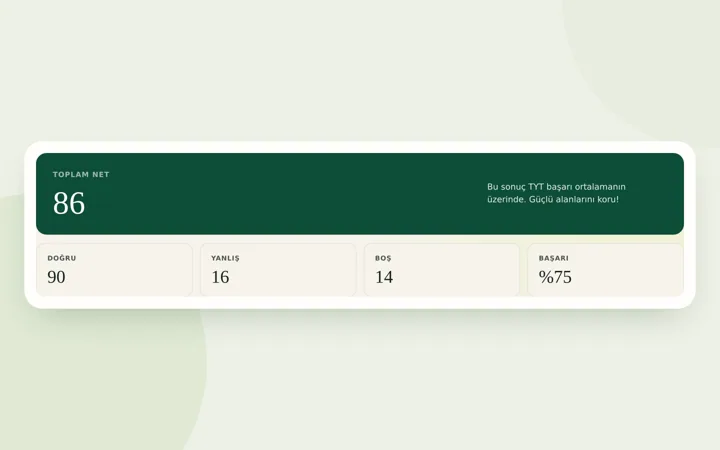 Deneme
ni elle gir ya da PDF karneni aktar. İki denemeyi karşılaştır, yanlış ve boşlarının nedenlerini kaydet.
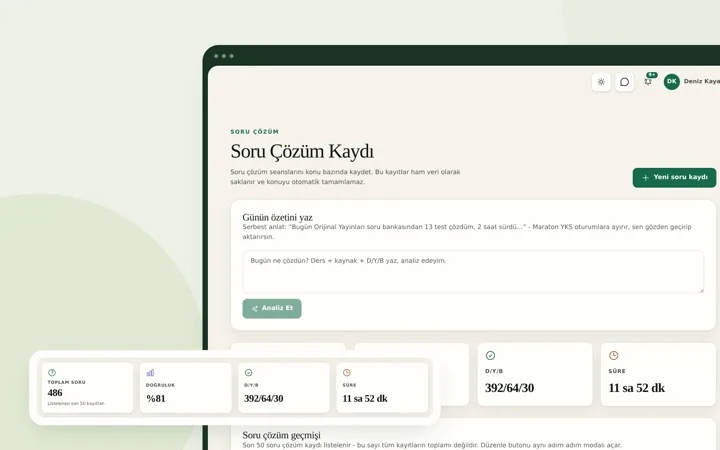 Çalış ve kaydet
Çalıştığın konuyu, çözdüğün soruyu ve ayırdığın süreyi kaydet. Denemelerinin net trendi tarih tarih birikir.
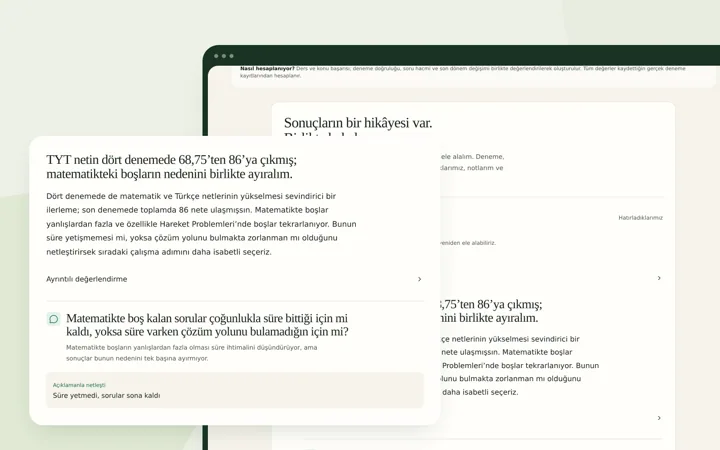 Maraton Koç
Denemelerine ve çalışma kayıtlarına bakar, bulgularını seninle konuşur; nedenini sorar.
Görseller örnek öğrenci hesabındandır.
Maarif modeli programlarında kazanımların yerini “öğrenme çıktısı” alır. Arama yaparken “kazanım” ve “öğrenme çıktısı” bu sayfalarda aynı listeyi anlatır.
Programda her öğrenme çıktısı, a), b), c) gibi harflerle sıralanan süreç bileşenleriyle ayrıntılandırılır. Bu sayfalarda süreç bileşenleri, bağlı olduğu çıktının altında MEB programındaki ifadeyle verilir.
Hayır. Bu sayfa MEB’in öğretim programını gösterir. Bir sınav yılının konu kapsamı ÖSYM kılavuzuyla belirlenir; 2028 YKS için resmî konu listesi henüz yayımlanmadı.
Kod; dersin kısaltmasını, sınıfı, üniteyi ve çıktının sırasını gösterir. Örneğin FİZ.10.1.1, 10. sınıf fizik dersinin 1. ünitesindeki 1. çıktıdır.
MEB Türkiye Yüzyılı Maarif Modeli ortaöğretim programlarından (tymm.meb.gov.tr). Çıktı ve süreç bileşeni metinleri programdaki ifadeyle verilir; yorum eklenmez.
Kaynak: MEB TYMM öğretim programı PDF’i. Öğrenme çıktısı metinleri programdaki ifadeyle verilmiştir. Son güncelleme: .